Les Fermes de la Vie

Transmission cluster

Intergenerational transmission: connecting ages in village life

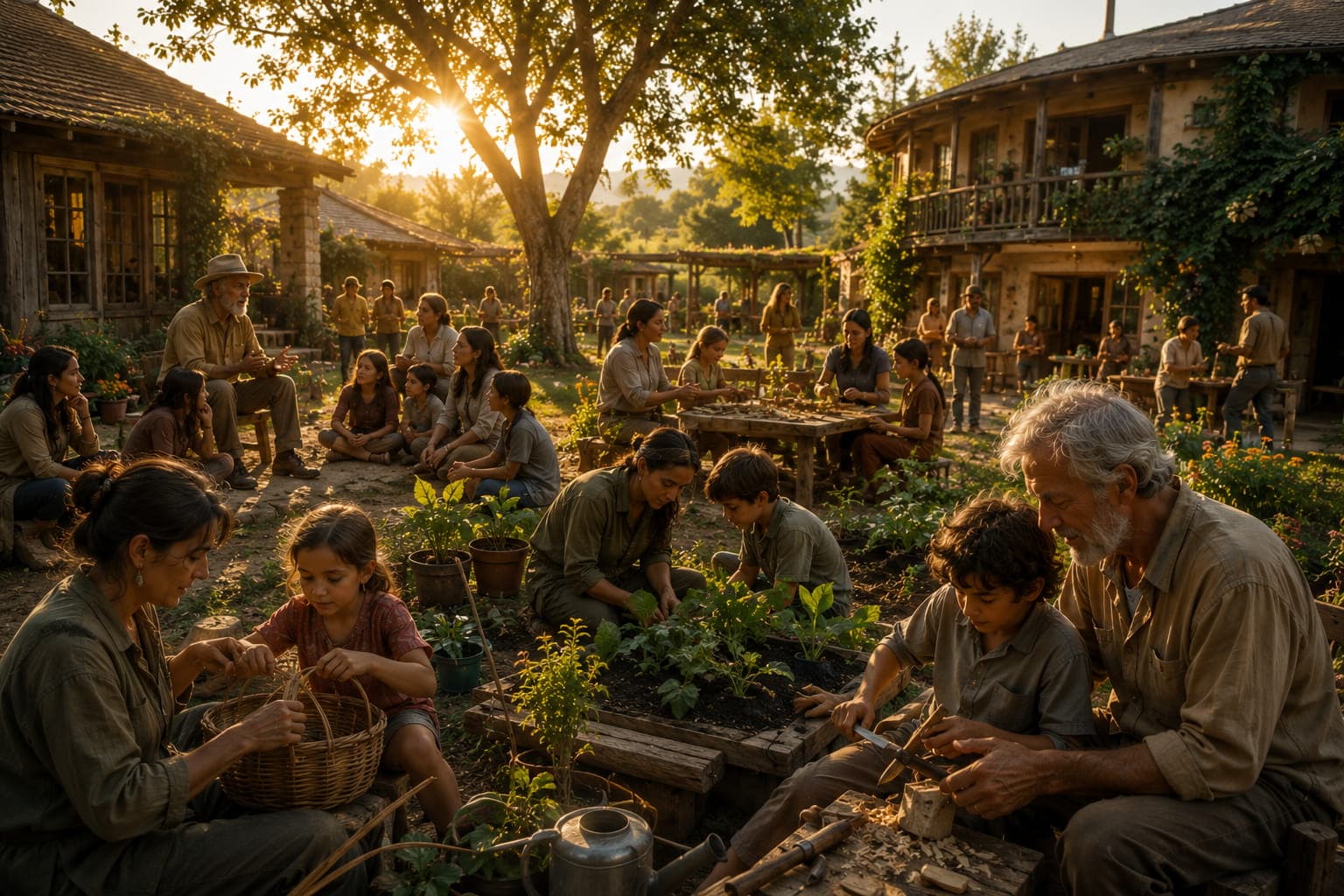
A resilient village deliberately creates daily encounters between generations. Intergenerational transmission is not social decoration, it is common-life infrastructure.

Intergenerational transmission in the village: mutual aid, shared learning, and collective life

Why it is strategic

Age segregation weakens shared references, erodes common narratives, and interrupts useful knowledge transfer.

When generations cooperate, cultural continuity, social cohesion, and adaptive capacity improve together.

Which times and places to organize

Shared meals, mixed worksites, open councils, and multipurpose common spaces create real, recurring interactions.

The principle is to mix uses rather than isolate functions by age.

Roles of elders and youth

Elders transmit memory, experience, and judgment; younger people contribute energy, creativity, and new skills.

Healthy transmission is reciprocal: everyone teaches and learns.

Avoiding common traps

Avoid decorative folklore, youth instrumentalization, and role confusion.

Ensure each generation has a useful place, real voice, and fitting responsibilities.

Go further

Frequently asked questions

Why discuss intergenerational transmission, not only education?
Because knowledge circulation involves all ages, not only children.
Which formats actually work?
Regular concrete formats: mixed worksites, mentor pairs, shared meals, and councils.
How do we avoid folklore?
By assigning useful, recognized roles with real impact on village life.
What if generations live apart?
Create recurring physical gathering cycles and maintain continuity between meetings.
How can link quality be measured?
By cooperation frequency, perceived usefulness, and collective decision capacity.