Les Fermes de la Vie

Transmission cluster

Living conservatories: preserving cultivated biodiversity through use

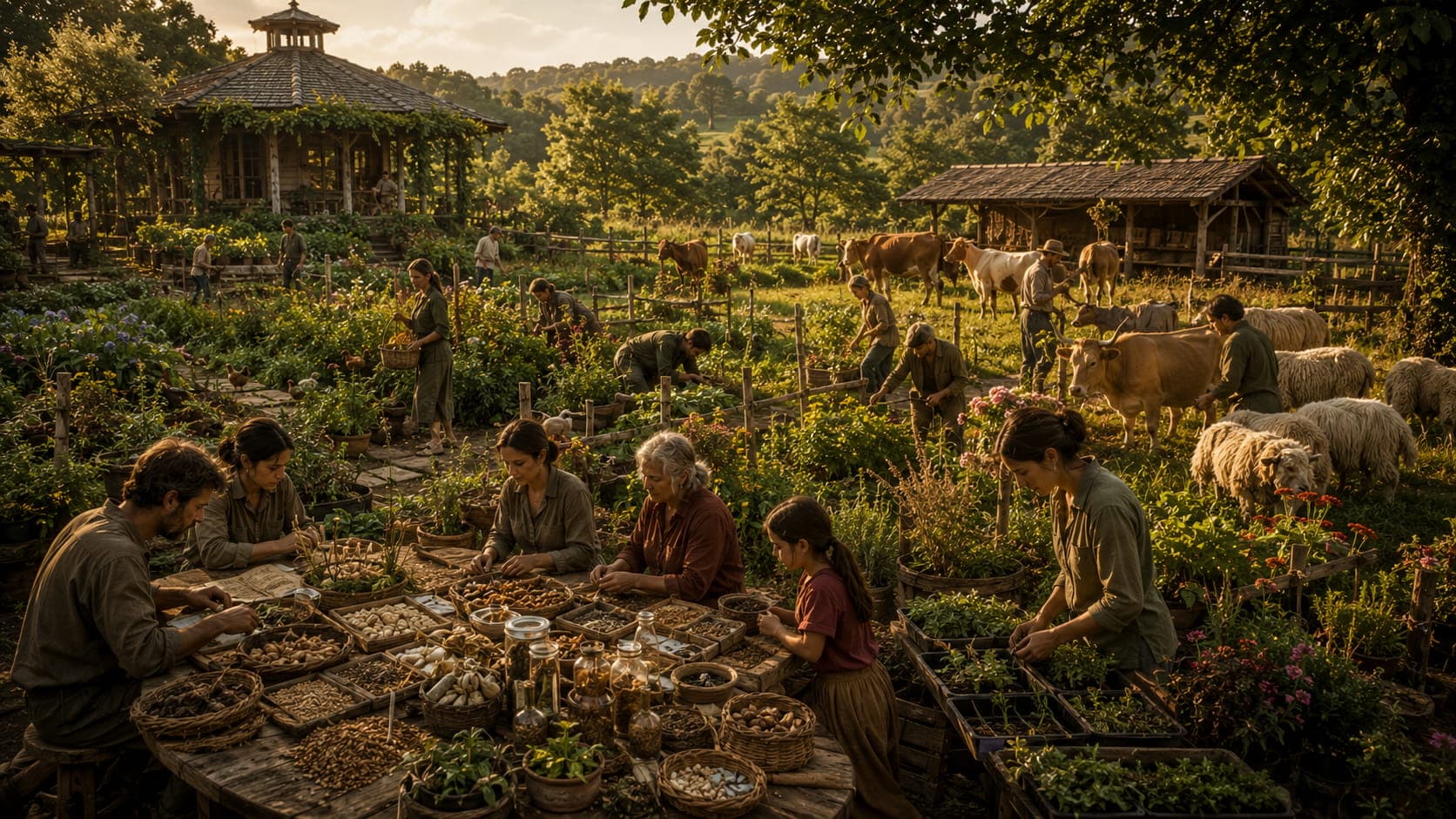
Preserving living systems is not only storage. A living conservatory keeps seeds, varieties, and know-how in active circulation, season after season.

Living conservatories: preservation of seeds, local varieties, and cultivated biodiversity

Why preserve through use

Cultivated biodiversity declines quickly when not reproduced locally.

Practice-based conservation maintains adaptation to place and living interactions.

What to prioritize

Peasant seeds, local fruit varieties, local breeds, and useful plants form a strategic foundation.

Priorities depend on local conditions and long-term stewardship capacity.

Associated know-how

Conserving biological material without associated gestures is not enough.

Variety sheets, practical workshops, and seasonal feedback must accompany conservation.

Network organization

Each village conserves part of diversity and exchanges with others to prevent loss.

Working with specialized networks improves technical quality and legal safety.

Go further

Frequently asked questions

What is a living conservatory?
A system of conservation through active cultivation, use, and transmission rather than passive storage.
Why not rely only on seed banks?
They are useful but cannot replace living adaptation to local place and practices.
How do we start?
Select a few adapted varieties and breeds, then build realistic yearly stewardship.
Does the legal framework allow sharing?
Yes in multiple cases, provided current rules are understood and respected.
How to coordinate with other villages?
Through regular exchanges of living material, varietal data, and practical training.