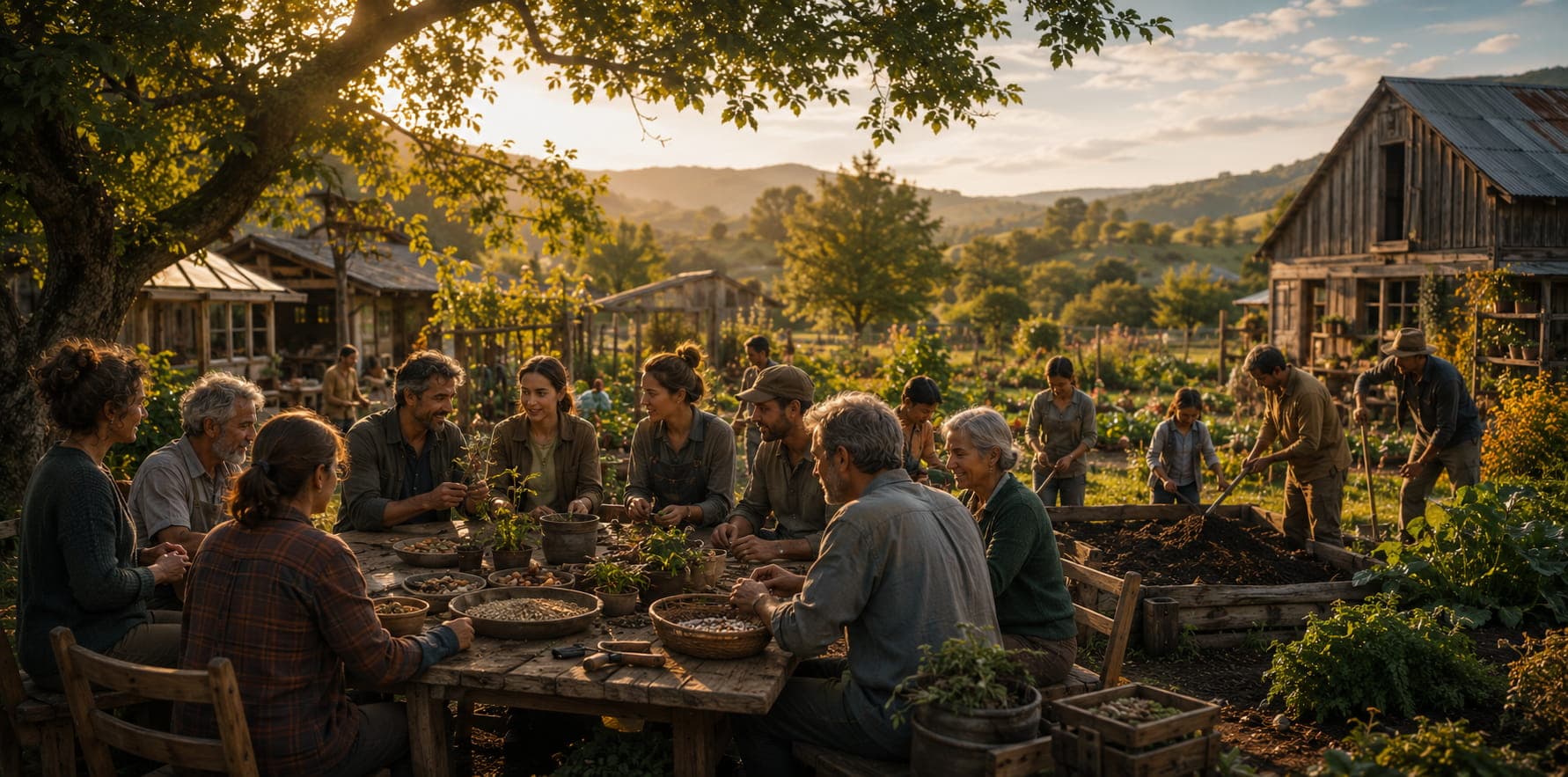
Why is peasant knowledge strategic?
Peasant knowledge is the living memory of long relationships between people, soil, climate, and biodiversity.
This memory lives in gestures, rhythms, and daily decisions; when practice disappears, knowledge fades quickly.
The challenge is to keep it in real use, not only in archives.
Which skills should be documented first?
Start with skills critical to local food autonomy: seeds, market gardening, animal care, preservation, and processing.
Then include nearby craft know-how that strengthens the village's material resilience.
A simple local map of knowledge holders helps set clear priorities.
How can we document without freezing practices?
Combining gesture videos, long interviews, and short technical sheets makes transmission more robust.
Knowledge that is documented but never practiced eventually disappears, so each record needs live practice cycles.
Regular workshops, collective worksites, and companionship are the most effective formats.
What collective organization is needed?
Transmission should be a permanent village function, with an annual calendar and identified mentor-learner pairs.
Cross-sharing prevents one person from becoming the sole holder of a skill and increases continuity.
Digital tools can support coordination, but never replace learning by doing.
Connection with the 500 villages project
The network enables knowledge circulation across territories: what is learned here can be transmitted elsewhere.
Mutualization lowers the risk of definitive loss when several villages practice the same skill.