Les Fermes de la Vie

Transmission cluster

Mentorship and companionship: transmission through long-term relationships

Living knowledge is transmitted over time, through contact with a mentor in real practice. Mentorship builds finesse, autonomy, and continuity.

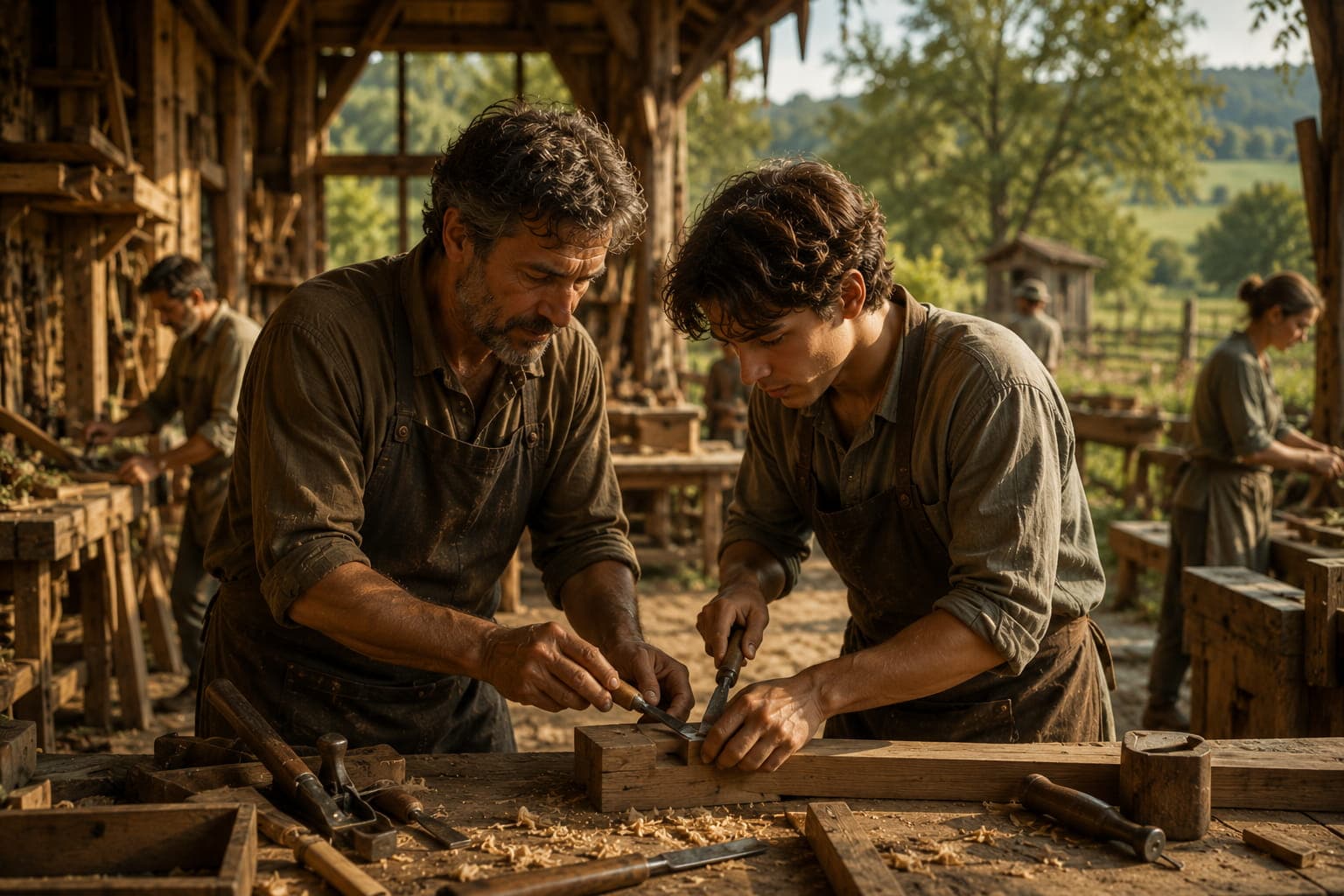
Mentorship in the village: transmission of gestures, companionship, and practical learning

Why mentorship is irreplaceable

Living skills combine technique, judgment, and posture; only long-term relationships transmit all three.

Mentorship develops practitioners who can adapt and transmit in turn.

Useful formats

Seasonal companionship, intergenerational pairs, rotating paths, and project mentorship are complementary.

The key is to cover a full practice cycle, not a one-off initiation.

Relational framework

Goals, duration, rhythm, compensation, and review should be explicit from the start.

A simple framework protects the relationship and prevents misunderstandings.

Valuing mentors' time

Transmission consumes productive time and must therefore be recognized and funded.

A dedicated annual transmission budget helps stabilize mentorship pathways.

Go further

Frequently asked questions

What is the difference between mentorship and training?
Mentorship is long-term and practice-based, while training is usually shorter and more standardized.
How long should companionship last?
At least one full cycle of the target skill: season, project, or complete production process.
Should mentors and learners be compensated?
Ideally yes, with models adapted to local context and actual time commitment.
How can emotional dependency be avoided?
By defining expectations, duration, objectives, and a clear end-of-path review.
How do we recruit mentors?
By identifying local knowledge holders and proposing a clear, respectful framework.