Les Fermes de la Vie

Transmission cluster

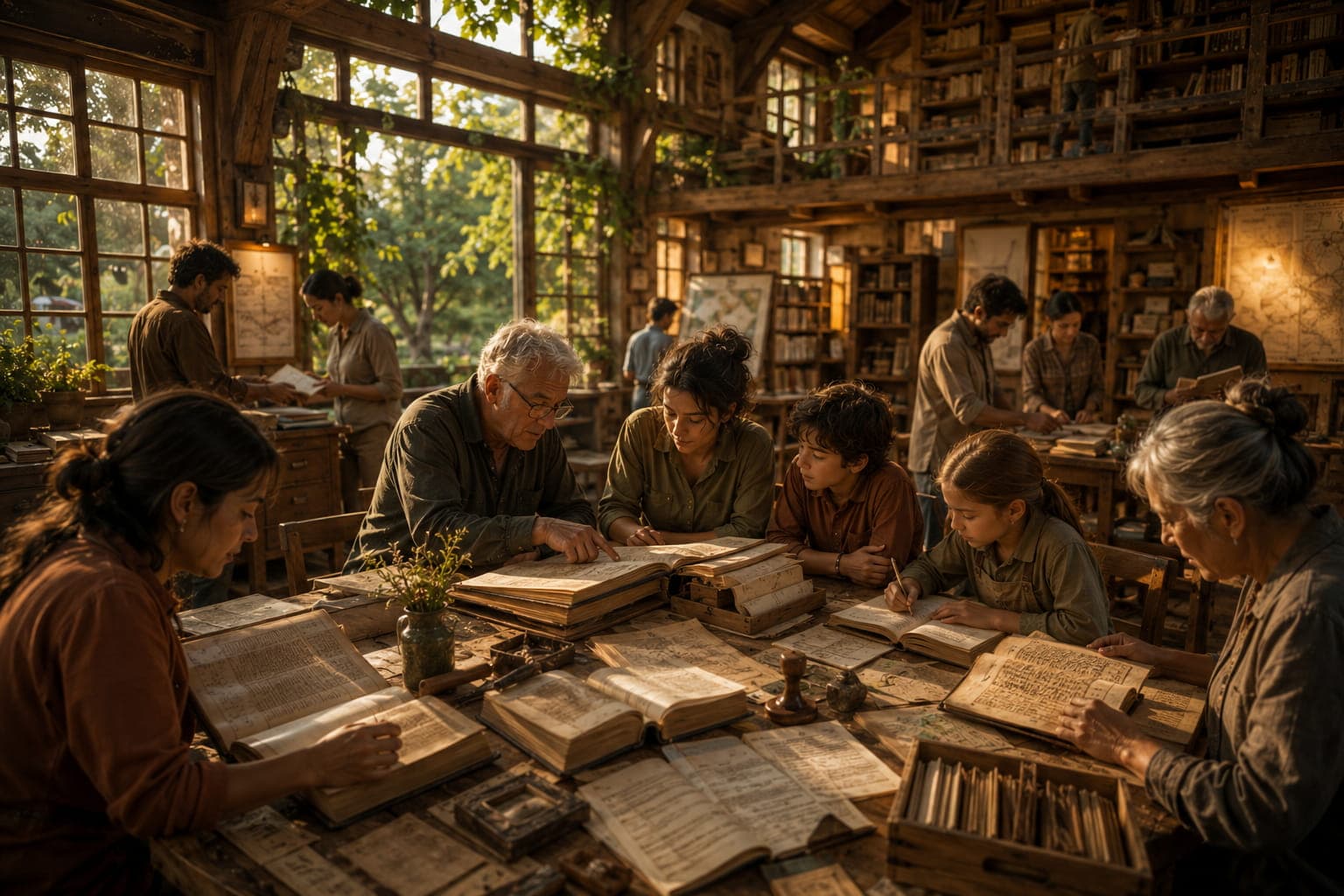
Book and written heritage: anchoring knowledge over time

Books and written archives remain key tools for long-term transmission. They complement living practice by preserving robust, shareable, and durable references.

Book and written heritage: archives, knowledge transmission, and living village memory

Why writing remains strategic

Written material protects memory when practice is temporarily interrupted.

Strong documentation can cross generations without reliance on a single platform.

Document families

Technical manuals, foundational texts, and memory archives serve complementary needs.

Together they link operations, long-term vision, and territorial memory.

Editorial framework

A charter, editorial committee, and update cycle maintain coherence and quality.

The goal is to prevent fragmentation while keeping contributions open.

Distribution and access

Technical content is more effective when openly shareable across villages.

Public-facing books can help finance part of the editorial effort.

Go further

Frequently asked questions

Why still print books?
Because they remain offline-readable, durable, and independent from software obsolescence.
Which documents should be prioritized?
Operational manuals, vision texts, and local memory archives.
Should content be open access?
For technical resources, yes, to maximize knowledge circulation.
How can fragmentation be avoided?
With clear editorial governance, structured cataloging, and periodic reviews.
How is this funded?
A mix of sales, philanthropy, targeted campaigns, and local transmission budgets.