Les Fermes de la Vie

Transmission cluster

Living school: learning through real life in a resilient village

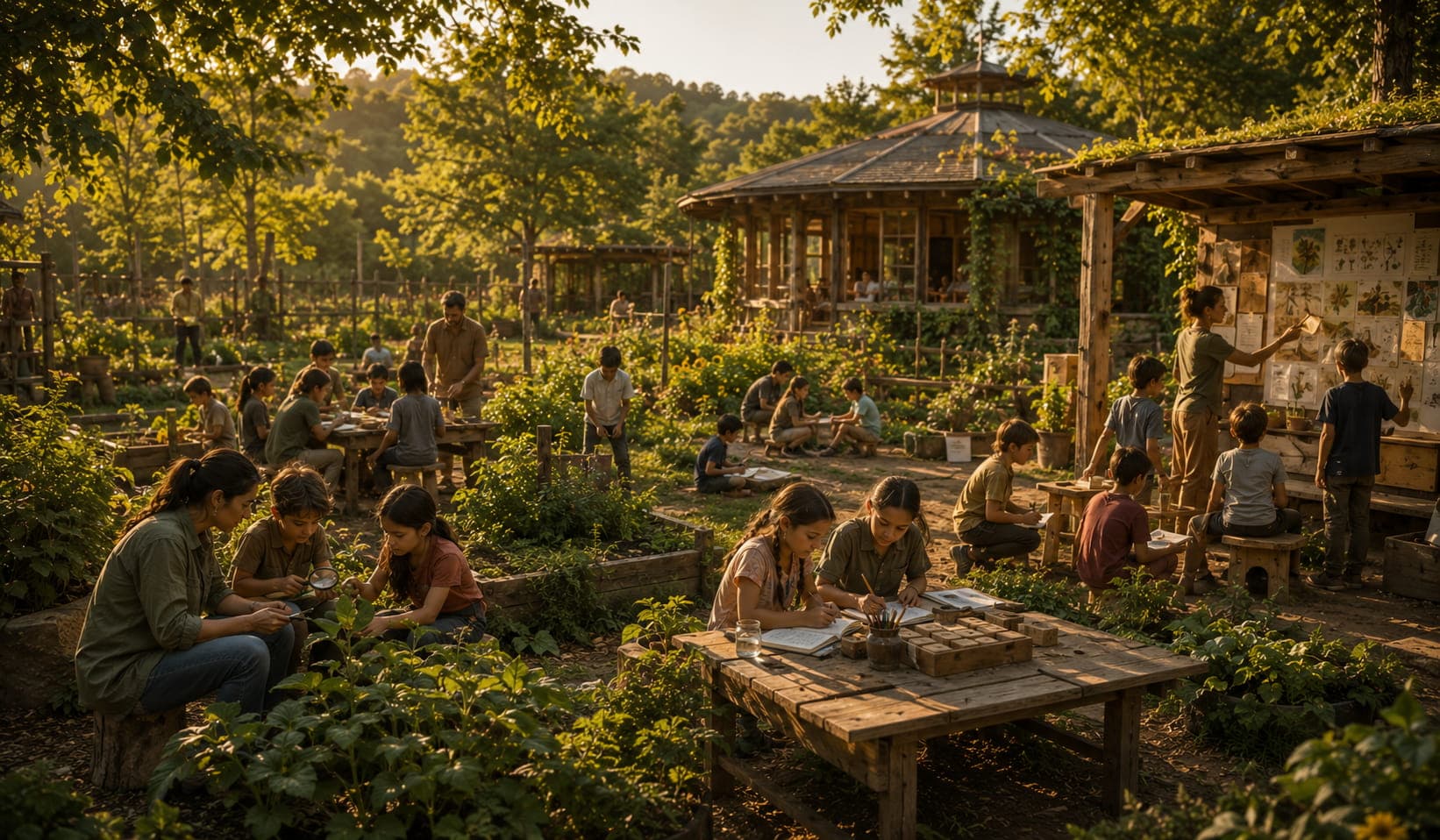
A living school combines strong fundamentals, concrete projects, and permanent links with local territory. It prepares children to understand, act, and cooperate in real situations.

Living school in the village: practical learning, nature, and collective transmission

Why a living school?

The gap between school content and lived reality weakens meaning and engagement.

A living school reintegrates learning into concrete contexts while keeping high standards on fundamentals.

What practical pedagogy?

It combines autonomy, cooperation, project-based learning, and learning by doing.

Village adults, including craftspeople and farmers, contribute alongside teachers.

Possible legal frameworks

Different paths exist: contracted, independent, collective homeschooling, or structured extracurricular models.

The choice depends on local resources, legal context, and collective maturity.

Connection with village life

School becomes a node of common life: markets, workshops, gardens, worksites, and shared stories.

Children learn in useful situations and make real contributions to the place.

Go further

Frequently asked questions

What is a living school?
A school connected to real village life, ensuring fundamentals and practical learning.
Is it compatible with French regulations?
Yes, through several legal setups, each with its own constraints and freedoms.
Are core skills really acquired?
Yes, often better when learning is meaningful in real activities.
What about advanced academic knowledge?
It remains essential and becomes more engaging when grounded in lived experience.
How is progress assessed?
Through a mix of fundamentals tracking, project presentations, and formative assessment.